

A Collection of Interior Design Inspiration by Room

Some rooms stay with us.
It may be the way morning light moves across a kitchen, the proportion of a living room that immediately feels comfortable, or the quiet restraint of a bedroom that seems to slow the pace of the day.
Our new collection of interior design inspiration by room was created to shape the way you live

Kitchens, living rooms, bedrooms, baths, dining spaces, and home offices each offer a different perspective on proportion, materials, light, and the way a room supports everyday life.
The intention is simple: to help you notice what feels right to you.
Begin with the Way You Want a Room to Feel
Before thinking about finishes or furnishings, I often think about atmosphere.
Should the room feel intimate or open? Quiet or energetic? Designed for conversation, retreat, work, or gathering?
Those questions shape everything that follows.
A living room may need to encourage connection while still allowing people to move through it naturally.
A bedroom should offer a sense of calm without feeling spare.
A dining room can feel intimate even within an open plan when scale, lighting, and proportion are handled carefully.
When you begin with feeling rather than style, the decisions become more personal, and often more enduring.
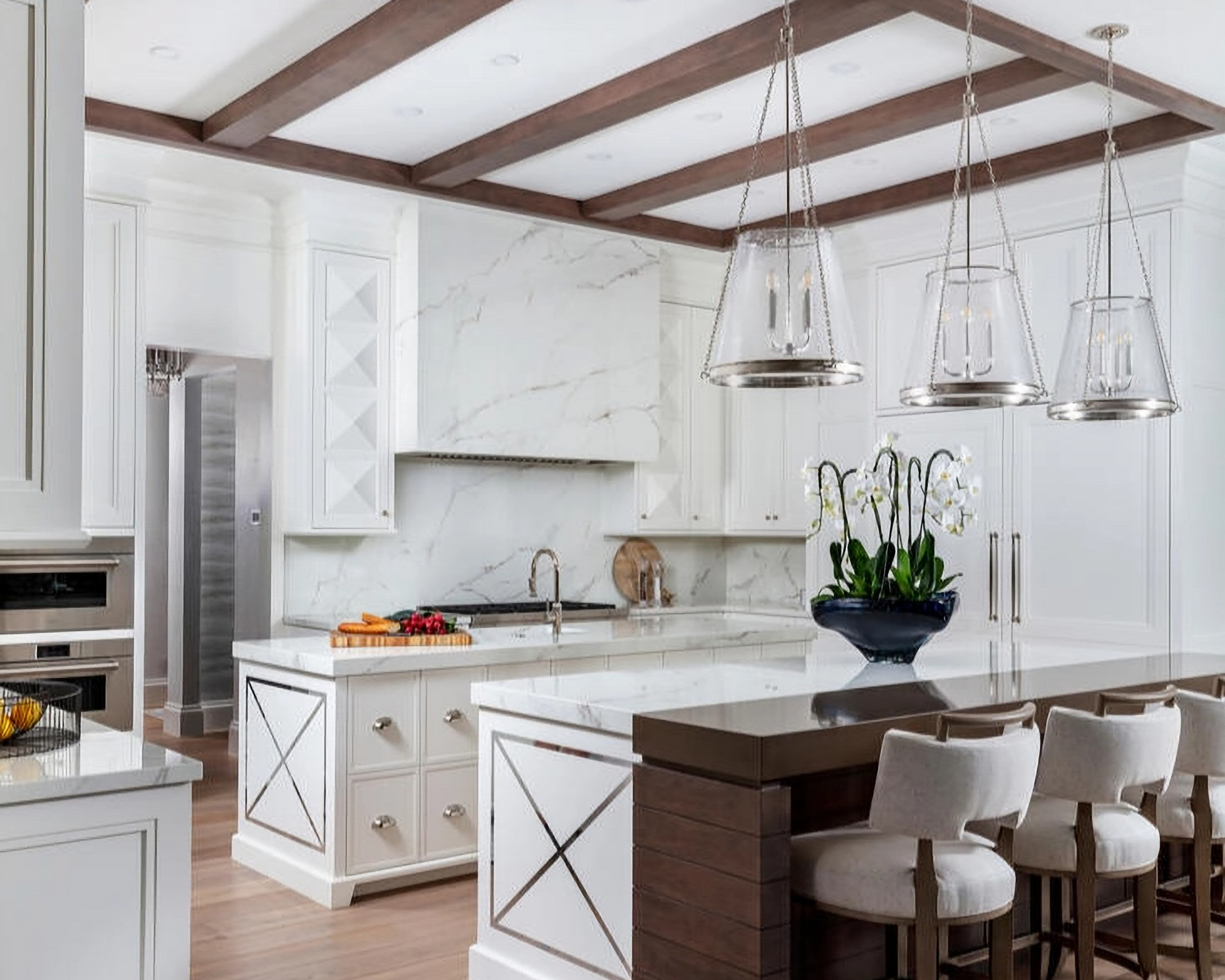
Few rooms ask as much of a design as the kitchen.
It has to function beautifully in the quiet hours of the morning and feel equally comfortable when the house is full. Cabinetry, lighting, stone, appliances, seating, storage, and circulation all have to work together, but the best kitchens never feel overly considered.
They simply feel natural.
Our kitchen collection offers a closer look at how those elements can take different forms from one project to another. Some spaces are lighter and more restrained, others carry deeper contrast or stronger architectural detail, but each is shaped around the same question: how will this room actually be lived in?
That is where kitchen design becomes more than a composition of beautiful materials.
It becomes part of the rhythm of the home.
A living room should invite you in.
That sense of ease often comes from decisions that are almost invisible. The distance between a sofa and a chair. The scale of a rug. The height of a light fixture. The way a built-in relates to the architecture around it.
None of these choices exists on its own. Together, they establish the balance of the room.
Our living room collection reflects a range of homes and architectural settings, but what connects them is a sense of proportion and comfort.
Furnishings are selected not simply because they are beautiful, but because they belong to the room and support the way people will gather there.
Bedrooms and bathrooms offer an opportunity to change the pace of the home.
These spaces can feel softer, more intimate, and more personal. Materials become quieter. Lighting becomes more nuanced. Storage is considered in ways that allow the room to remain visually calm.
The most successful private spaces do not need to make a dramatic statement.
They create a sense of retreat.

That may come through the softness of a textile, the warmth of wood, carefully placed lighting, or simply the way the room has been edited so nothing feels unnecessary.
Some of the most interesting rooms are those with a very specific purpose.
A dining room is shaped around gathering and occasion. A home office needs to support focus without losing the character of the rest of the residence. Even transitional spaces, entries, hallways, and connecting rooms, influence how the home is experienced as a whole.
These spaces remind us that thoughtful design is not limited to the rooms people notice first.
The quieter moments matter too.
Let Inspiration Become Personal
Looking at completed interiors is useful, but the goal is never to reproduce another home.
Instead, notice what draws you in.
Perhaps it is the warmth of a particular wood tone. The restraint of a neutral palette. A sculptural light fixture. The relationship between a kitchen and living room. The simplicity of a bedroom that feels exceptionally calm.
Those reactions are valuable. They begin to reveal your own point of view.
From there, design becomes a process of interpretation rather than imitation. Through full-service interior design, those ideas can be shaped around the architecture of your home, its setting, and the way you want to live.
Whether the project is in Naples or Cleveland, the most meaningful interiors are the ones that feel entirely at home in their surroundings, and entirely personal to the people who live there.
Explore the Collection, Room by Room

Whether you are planning a new residence, considering a renovation, or simply beginning to understand what you want your home to feel like, this collection offers a place to start.
Explore slowly.
Look beyond individual furnishings and notice the relationships between light, proportion, color, texture, and architecture.
The most useful inspiration does not tell you what your home should look like.
It helps you discover what feels like yours.
Frequently Asked Questions
How should I use design inspiration when planning my home?
Look beyond individual products or colors and pay attention to what you consistently respond to. Consider proportion, layout, light, materials, furniture placement, and atmosphere. These patterns can help define the direction of your own home.
Should every room in a home have the same design style?
Not necessarily. Each room can have its own character while still feeling connected to the rest of the residence. Repeated materials, complementary colors, architectural details, and consistent proportions can create continuity without making every space feel identical.
When should I involve an interior designer?
For new construction and significant renovations, early involvement is ideal. It allows space planning, cabinetry, lighting, plumbing, finishes, and furnishings to be considered alongside the architecture rather than addressed later as separate decisions.
Does J. Lynn Design Group design complete homes?
Yes. J. Lynn Design Group provides full-service interior design
for custom homes, new construction, significant renovations, high-rise residences, second homes, and complete furnishing projects in Naples, Florida, Cleveland, Ohio, and surrounding communities.


Comments